
The Role of Brokers in Commodity and Off-Market Transactions
What They Do, Why They Matter — and Why Behaviour Determines Success or Failure.
In commodity and off-market transactions, the presence of brokers, intermediaries, or introducers is both common and frequently misunderstood. Some market participants see brokers as essential facilitators. Others view them as unnecessary layers that complicate transactions, slow execution, or introduce risk.
The reality is more nuanced.
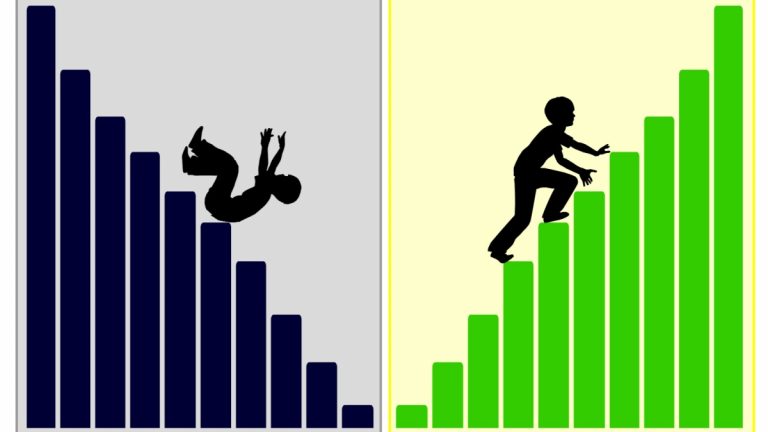
Brokers do not succeed or fail because of their title. They succeed or fail because of their behaviour.
In serious markets, outcomes are determined not by who is “in the middle”, but by how participants conduct themselves, manage information, align incentives, and collaborate toward execution.
This article explains what brokers are meant to do, what distinguishes professional brokers from problematic ones, and how broker behaviour directly affects whether a transaction progresses — or collapses.
What Is a Broker (and Why the Title Matters Less Than the Behaviour)
In off-market and private transactions, different labels are used interchangeably: broker, intermediary, introducer. Titles vary by market, geography, and tradition, but the practical distinction is usually as follows:
- An introducer typically connects parties and may have limited involvement beyond the introduction.
- An intermediary may assist with coordination, communication, or process.
- A broker actively supports execution by helping align requirements, manage expectations, and keep the transaction moving.
In practice, these roles often overlap. What matters is not the label, but the function performed and the standards applied.
A professional broker understands that their role is not to control the transaction, but to enable it.
Why Brokers Exist in Serious Markets
Buyers and sellers often ask a fair question:
Why not deal directly?
In theory, they can. In practice, off-market transactions are rarely simple. Brokers exist because they can add value in ways direct counterparties often cannot, including:
- Access and reach: connecting parties that would not otherwise find each other.
- Discretion: enabling confidential exploration without premature exposure.
- Translation: aligning commercial, legal, operational, and compliance expectations.
- Process discipline: helping parties follow a coherent execution path.
- Risk reduction: identifying mismatches, unrealistic assumptions, or structural flaws early.
When performed professionally, brokerage reduces friction and increases the probability of completion. When performed poorly, it does the opposite.
The Execution Reality: Nobody Gets Paid Unless the Deal Gets Done
In off-market transactions, compensation is almost always success-based. Fees are earned only when a transaction completes. This creates a fundamental truth that serious participants understand:
Execution is the only outcome that matters.
Professional brokers internalise this reality. They work collaboratively with other brokers, mandates, buyers, and sellers because obstruction, secrecy, or ego benefits no one. Fragmented behaviour increases risk and delays; aligned behaviour increases momentum.
When brokers forget this — or behave as if they can “win” without execution — transactions fail.
What Good Brokers Do Differently
Professional brokers are not defined by how loudly they speak or how many deals they claim to have done. They are defined by consistency, discipline, and judgement.

Common indicators of a good broker include:
- Clarity of role and authority
They are transparent about who they represent, what authority they have, and where their role begins and ends. - Information discipline
Information is shared on a need-to-know basis, in a structured way, and only when appropriate. - Realism
They do not oversell timelines, pricing, availability, or certainty. They manage expectations early. - Process awareness
They understand that serious transactions follow stages and that skipping steps usually creates problems later. - Collaborative mindset
They work constructively with other brokers and mandates rather than treating the transaction as a zero-sum contest. - Respect for professional standards
They operate with awareness of anti-money laundering expectations, sanctions boundaries, and information control norms — not as obstacles, but as part of doing business properly.
Above all, good brokers focus relentlessly on alignment: aligning requirements, documents, timing, and expectations so that execution remains possible.
What Bad Brokers Do — and Why Deals Fail
Poor broker behaviour is one of the most common causes of transaction failure. While it appears in many forms, the underlying pattern is consistent: behaviour that increases friction, uncertainty, or mistrust.

Firm red flags include:
- Over-promising early
Guarantees of speed, certainty, or outcomes that are not supported by structure or evidence. - Unclear authority lines
Inability or reluctance to explain who they represent or how decisions are actually made. - Document avoidance or confusion
Resistance to normal process steps, or constant changes in position as scrutiny increases. - Information hoarding
Treating information as leverage rather than a tool for alignment. - Fee-first behaviour
Excessive focus on compensation mechanics before fundamentals are established. - Adversarial posture
Framing the transaction as a battle for control rather than a shared execution challenge.
When these behaviours appear, experienced participants do not “push through”.
They pause, reassess — and often disengage.
Collaboration Is Not Optional — It Is Structural
In private markets, broker chains are a reality. Multiple intermediaries may exist between buyer and seller, each with relationships, responsibilities, and expectations.
Professional brokers understand that:
- Fragmentation increases risk.
- Secrecy slows progress.
- Ego creates failure.
Collaboration is not a courtesy. It is a structural requirement for execution.
The most successful transactions are those where brokers work together to:
- clarify authority,
- rationalise communication,
- reduce duplication,
- and keep the transaction focused on deliverables rather than personalities.
A Professional Broker Code of Conduct
At Finova, brokers operating within our ecosystem are required to agree to a clear code of conduct. While phrased simply, it reflects standards widely recognised by serious market participants.
A professional broker commits to:
- Acting transparently with respect to role, authority, and representation
- Prioritising execution over positioning or control
- Respecting information discipline and confidentiality
- Operating within accepted compliance and sanctions boundaries
- Collaborating constructively with other participants
- Stepping back where their involvement no longer adds value
These are not aspirational ideals. They are practical conditions for deal completion.
If You Are a Buyer or Seller: Questions to Ask Any Broker
Buyers and sellers can protect themselves by asking simple, direct questions early:
1 – Who do you represent, and what authority do you have?
2 – How does this transaction typically progress from here?
3 – What assumptions are being made that could later prove wrong?
4 – How is information shared, and with whom?
5 – What behaviours would cause you to recommend walking away?
Professional brokers answer these calmly and clearly. Problematic ones often cannot.
Final Thoughts
Brokers are neither inherently good nor inherently bad. They are effective or ineffective based on how they behave.
In serious commodity and off-market transactions, professionalism, discipline, and collaboration are not optional extras — they are prerequisites.
Where those standards exist, brokers add real value.
Where they do not, transactions fail — and they should.
Understanding this distinction is one of the most powerful tools buyers and sellers can have.